
Data and Modelling
The research group for Data and Modelling was established by merging the groups (Herd “Management and Animal Housing” with the VetStat group.
We collect and utilize data to discover and disseminate knowledge about management, antimicrobial usage and housing of animals to improve their performance, health and welfare in a sustainable manner to improve the quality of animal and human life. As part of the Vetstat cluster, we contribute to the veterinary contingency and communicate its results in Danish to farmers and veterinarians.
The group is exploring the field of Precision Livestock farming and uses sensor technologies and data driven methods to optimize animal performance, welfare and support farmers in making sustainable decisions. Overall, the group has a large international network and takes part in several EU projects.
The group collaborates with industry and private companies in almost all its research projects and makes extensive use of own research in teaching.
1. Mission
The overall research group mission is to deliver high-impact research and research-based teaching that advance sustainable animal housing, health and management systems. We aim to develop and maintain a strong research group for data and modelling, integrating large-scale databases, computer vision and sensor technology, and artificial intelligence to support data-based decision-making in animal production. As part of the Vetstat cluster, we contribute to the veterinary contingency and ensure that our research is communicated internationally and in Denmark to farmers, veterinarians, and stakeholders.
2. Vision
Our vision is to be an internationally recognized research group in data and modeling focused on livestock systems, enabling sustainable, welfare-oriented, and prudent-antimicrobial animal production. By transforming complex data into actionable knowledge, we aim to improve animal health and welfare, enhance production efficiency and contribute to the overall quality of life for both animals and humans
3. Focus Areas / Priorities / Objectives
To strengthen our scientific impact and societal relevance, our activities are organized into four core pillars:
Current focus areas:
i) Data Systems, Surveillance, and Veterinary Contingency
- VetStat-based research on antimicrobial usage (AMU)
- Risk assessment of antimicrobial resistance (AMR)
- Identification of risk factors and development of alternatives to AMU
- Contribution to national veterinary contingency systems
ii) Precision Livestock Farming and Artificial Intelligence
- Sensor-based monitoring (video, audio, and environmental data)
- Machine learning for early detection of health and welfare changes
- Behavior modelling and automated classification systems
- Development of predictive and decision-support tools for farmers
iii) Animal Systems, Housing, and Environment
- Design and optimization of animal housing systems
- Climate and environmental conditions in and around livestock production
- Integration of animal health, welfare, and productivity
iv) Sustainable and Regenerative Livestock Systems
- Development of sustainability indicators and data-driven assessments
- Use of public and farm-level data to evaluate system performance
- Advancing regenerative livestock production approaches
- Supporting the transition towards sustainable dairy and livestock systems
Across all pillars, we apply advanced statistical modelling, machine learning, and data integration methods to transform complex datasets into actionable insights.
4. Future priorities:
Strengthen our leadership in VetStat-based AMU and AMR research, reinforcing our role in veterinary contingency and policy support
Expand the use of real-time sensor data and adaptive models to enable early detection and prediction of changes in animal health, welfare, and productivity
Develop integrated decision-support systems that assist farmers in making sustainable and evidence-based management decisions
Further position the group at the forefront of AI-driven livestock research and digital agriculture
Leverage public and large-scale datasets to advance sustainability assessments and explore new models for dairy and livestock production systems
- Research Strengths / Comparative advantage
The Data & Modelling group combines strong interdisciplinary expertise in animal nutrition, antimicrobial usage and resistance, health monitoring and surveillance, disease modelling, animal housing, statistical methods and machine-learning/AI-based approaches using these expertises as the fundamental tools behind the work with big data. Quantitative Methods are applied in Herd Management, Precision Livestock Farming, Machine-learning methods for monitoring and classifying animal behavior, health and welfare. The group possesses distinctive scientific expertise in areas like Climate and environmental conditions in and around animal housing, Animal and Sustainability, Development of Regenerative Livestock Systems, and Vetstat-based research.
Our key comparative advantages:
- Unique access to large-scale, longitudinal datasets such as Vetstat and Commercial Sensor Data (images, rumination, activities);
- Strong integration of data science, animal science, and applied livestock systems
- Direct engagement with policy, veterinary contingency and industry stakeholders
- Ability to translate complex data into operational tools and actionable knowledge
This combination enables us to deliver both high scientific impact and tangible contributions to sustainable livestock production.
- Vetstat based research on antimicrobial usage (AMU), risk assessment of antimicrobial resistance, risk factors for high AMU, alternatives to AMU (https://dkvet.dk/forskning/udvalgte-projekter/vetstat-klyngen/)
- Veterinary contingency tasks
- Quantitative Methods in Herd Management, Precision Livestock Farming, Machine-learning methods for image recognition
- Modelling animal behavior
- Climate and environmental conditions in and around animal housing
- Design of animal housing
- Animal health and welfare
- Animal and Sustainability
- Development of Regenerative Livestock Systems
Pig Levy Foundation (SAF): Konsekvenser af restriktioner på antibiotikabehandling af grise med særligt fokus på krav om at følge produktresuméet i den nye EU-forordning om veterinærmedicin. Samarbejde med LF + koordinering med VET-MYN projekter
Pig Levy Foundation (SAF): Konsekvenser af tiltag til at mindske antibiotikaforbrug og -resistens med særligt fokus på udfasning af colistin og medicinsk zink i dansk griseproduktion. Samarbejde med LF + koordinering med VET-MYN projekter. Risiko analyse af Neomycin anvendelse i griseproduktionen.
GUDP (Grønt Udviklings- og Demonstrationsprogram) AI-baseret foderoptimering – realtidsprocessering af store datamængder i griseproduktionen, J. nr. 34009-24-2339, Udvikling af AI-baserede metoder til estimering af miljøpåvirkning ud fra fodersammensætning til slagtesvin samt optimering af fodersammensætning med henblik på maksimering af vækstpotentiale for svin og minimering af miljøpåvirkning
EU project DECIDE: Data-driven control and prioritisation of non-EU-regulated contagious animal diseases. Participation in regular Core Group meetings, participation in regular Work Package meetings (WP2), contribution to 2025 Technical Report, Contribution to Deliverable 2.5.: Warning Systems
GUDP, Tidlig påvisning af Infektion med PRRS, j. nr. 34009-24-2249)
SAF, AI modeller til påvisning og vurdering af halebid hos grise med lange haler;
AgriFoodTure/Innovation Fund Denmark. PERMA - Barn Air Optimization (PERMA-BAO). I samarbejde med: Kemisk Institut ved KU, AU, Ambiant Carbon ApS, Devlaps ApS, Norcover ApS og Arla Foods amba. Optimering af malkekvægstalde mhb på at opsamle det meste af metanudledningen i en begrænset luftmængde.
DANIDA project focusing on Nigeria. Sedentarization and Climate Change Resilience in Nigeria (SCREEN). The case of the Damau Household Milk Farm. Collaboration.
8) Project in collaboration with Novonesis. In vitro evaluation of amylase and a Bacillus-based direct-fed microbial on fermentation characteristics of high- and low-starch TMR.
- Crone CM, Rasmussen AP, Larsen C, Williams AR, Eskildsen MH, Christensen EMH, de Knegt LV, Amdi C. and Madsen JG, 2025. Effect of Benzoic Acid supplementation on growth performance and early development of gastrointestinal tract function and immune system in artificially reared suckling piglets. Livestock Science, Volume 294. Doi: https://doi.org/10.1016/j.livsci.2025.105655
- Rydal, M.P., Lyderik, K.K., Andersen, A.B. et al., 2025. Outbreaks of post-weaning diarrhea caused by ETEC F4 are strongly associated with CHCF1 genotype in Danish pigs. Sci Rep 15, 41748 (2025). https://doi.org/10.1038/s41598-025-26829-w
- Neves, A. L. A., Pfeiffer, M. A., Dhakal, R., Woudstra, S., Krömker, V., & Vieira, R. A. M., 2025. Effects of Fat Supplementation on Growth Performance and Blood Biochemical Parameters in Dairy Calves During Pre- and Post-Weaning Phases. Dairy 2026, Vol. 7, 7(1), 1. https://doi.org/10.3390/DAIRY7010001
- Jensen, DB, 2025. Predicting footpad lesion scores of Dutch broiler flocks using routinely collected data. Smart Agricultural Technology.
- Jensen, DB, 2025. Comparison of strategies for automatic video-based detection of piling behavior in laying hens. Smart Agricultural Technology:
- Stivanin, C.B.S, Vizzotto E.F, Bettencourt AF, Guadagnin AR, Aires JF, Machado FS, Campos MM, Tomich TR, Pereira LGR, Fischer V. Water intake and drinking behaviour in Holstein, Gyr and Girolando-F1 cows presenting high body condition score during the transition period. Arch Anim Nutr. 2025 Jun-Dec;79(3-6):248-266. doi: https://doi.org/10.1080/1745039X.2025.2586092.
- da Silva, D. V., Benhami, V. M. L., Moreira, E. D. A., De Paula, V. R., Tomich, T. R., Silva, D. A. L., & Pereira, L. G. R. (2025). Biologically based net energy allocation procedures can improve carbon footprint analysis in milk production systems. The International Journal of Life Cycle Assessment, 30(2), 668–681. https://doi.org/10.1007/s11367-025-02435-w
- Jensen, DB, 2025. Evaluation and comparison of pre-trained convolutional neural networks for detecting Equine pain face. Equine Veterinary Education, under review.
Conference oral presentations
- Pereira, L.G.R. "What Is the Right Way to Produce? Leveraging Data Science to Guide Us". CPH Cattle seminar. 14th of April 2026, Copenhagen, Denmark.
- Pereira, L.G.R, Knegt, L.V. Pfeiffer MA, Woudstra S, , Associations between bulk tank somatic cell count and multidimensional on-farm animal welfare scores in Brazilian dairy herds.) 2026 ADSA Annual Meeting, Milwaukee, WI. USA.
- Lyderik KK, de Knegt LV, Kruse AB, Alban L. Qualitative Insights on Antimicrobial Prescription Practices in Danish Pig Production: Understanding Danish pig veterinarians’ perceptions through interviews - A Pilot study. 15th SafePork Conference, October 6-8, 2025. Rennes, France.
- Lyderik KK, de Knegt LV, Kruse AB., 2025. Ongoing projects about analysis of antimicrobial use in pigs. Seminar on research in antimicrobial use based on VetStat and other data sources. November 24, 2025. Copenhagen, Denmark
- Lyderik, KK. 2025. Effects of increased number of daily meals on ileal digestibility of calcium and phosphorus in sows. ISEP
- Jensen, DB, 2025. AI for Animal Science: Comparative Analysis of Pre-Trained CNNs for Classifying Equine Pain Faces
- Kruse, AB, Dahl, J., de Knegt LV, Alban, L. Consequences of phasing out medical zinc oxide on antimicrobial use, vaccination and productivity in Danish weaner herds. 15th SafePork Conference, October 6-8, 2025. Rennes, France
- Pereira, LG.R. Keynote Speaker at the 2nd SIMBOVCERRADO – International Symposium on Sustainability of Dairy and Beef Cattle Farming in the Cerrado, 2025. (Symposium). Sustainable production in dairy farming in the Cerrado Biome: Soil and climate conditions, biodiversity, and levels of intensification. Campo Grande – Brazil.
- Pereira, LG.R. Keynote Speaker at the 3rd RTC Technical Journey, 2025. (Conference)
Milk of the future for consumers of the future. Gramado, Brazil - Pereira, LG.R. Keynote Speaker at the IV SINPEL – National Uflaleite Symposium on Dairy Cattle Farming, 2025. (Symposium). The regenerative awakening in milk production: balance, integration, and biodiversity for a sustainable future. Lavras, Brazil
- Pereira, LG.R. Keynote Speaker at the Low-Carbon Milk Production Seminar, 2025. (Seminar), Low-Carbon Milk and the Future We Want. Brasília, Brazil.
- Pereira, LG.R. Keynote Speaker at the 20th State Milk Forum, 2025. (Conference)
Milk carbon footprint: current knowledge and opportunities. Nao me toque, Brazil. - Pereira, LGR. Speaker at Schothorst Feed Research seminar. Beyond Milk: Pathways to Regenerative and Integrated Dairy Production. Netherlands, 2025.
Conference posters
- Pereira, L.G.R. Energy balance, methane production, and blood metabolites of calves with anaplasmosis. 2026 ADSA Annual Meeting, Milwaukee, WI. USA.
- Lyderik KK, Kruse AB, Alban L, de Knegt LV., 2025. Validating and monitoring antimicrobial use in Danish pig production using VetStat data and time-series models. SVEPM Conference 2025, March 26-28. Berlin, Germany.
- Pfeiffer MA, Woudstra S, Teixeira VA, de Knegt LV, de Souza GM, Tomich TR, Campos MM, Pereira LGR. Evaluating Sensor-Derived Rumination and Activity Data for Monitoring Pre-Weaning Dairy Calf: A Correlation Study with Traditional Metrics. The 76th EAAP Annual Meeting, August 25-29, 2025. Innsbruck, Austria.
- de Knegt LV, Kruse AB, Alban L., 2025. Preliminary assessment of the veterinary and human risk of antimicrobial resistance due to the increased use of neomycin in Danish pigs. The15th SafePork Conference, October 6-8, 2025. Rennes, France.
- Lyderik, KK, 2025. The number of daily meals for sows has only marginal influence on plasma metabolites and the gut microbiome. ISEP
- Jensen, DB, 2025. Automatic monitoring of piling behavior in laying hens using convolutional neural networks. PhD sommerskole i Lleida
- Abstract submitted to SVEPM 2026: Jensen DB, Veldhuis AV, Santman-Berends I, Vrieze E, Bastiaansen T, de Knegt LV. Early detection of calf disease from automated milk feeder data using dynamic linear models and random forests.
- Correia Cairo, F., Pereira, L. G. R., Panetto, J. C. C., Machado, M. A., Tomich, T. R., Campos, M. M., & Barbosa da Silva, M. V. G. (2025, September). Enteric methane dilution effects achieved with the genetic enhancement of Girolando cattle raised in tropical weather. Poster presented at the 76th Annual Meeting of the European Federation of Animal Science (EAAP), Innsbruck, Austria.
- Correia Cairo, F., Campos, M. M., Coelho, S. G., Tomich, T. R., Samarini Machado, F., Sacramento, J. P., & Pereira, L. G. R. (2025, September). Characterizing residual feed intake in Girolando cattle across growth and lactation phases. Poster presented at the 76th Annual Meeting of the European Federation of Animal Science (EAAP), Innsbruck, Austria.
- Quantitative Methods in Herd Management (SASK22001U).
- Livestock and Equine Production Science (SASK16002U).
- Advanced Livestock and Equine Production Science (SASK16004U).
- Klima i og omkring stalde
- Besætningssundhed: "Rumen development in calves" taught to Veterinary Students.
- Akademia (SVEB 25 001U). Excursion to pig farm – Bredebjerggård, teaching about Danish pig production
- Dyrs Ernæring og Præstation (SASA10143U) Excursion to DLG in Fredericia, main responsible adult present
- Praktisk Besætningsrådgivning og Kødkontrol (SVEK13006U). Teaching in epidemiology and legislation on antimicrobial use and animal welfare. Excursion to pig farm – Storgaarden, assisting with practical exercises and teaching about Danish pig production
- Besætningsrådgivning og Veterinær Folkesundhed (SVEK13114U). Teaching in statistics, epidemiology and VetStat.
- 3917-B1-1E25; Animals and Sustainability (LGRP responsible)
- 3915-B1-1E25; Husdyrernæring (LGRP teaching _ Ruminants Subjects)
- PhD sommerskole i Lleida, Spanien: Optimization and Artificial Intelligence in Agriculture
- PhD sommerskole i Uppsala, Sverige: Raising alarms based on dynamic linear models
- 3915-B3-3F26; Praktisk besætningsrådgivning og kødkontrol (SVEK13006U). On farm teaching on the life and daily routine of a dairy cow.
- NFOK17002U Molecular and Functional Properties of Milk. On farm teaching on the life of a dairy cow.
- Epidemiological methods for surveillance of infectious diseases (DTU 23261). Lecture “Precision Livestock Farming Methods in Animal Production, Health and Surveillance”.
Researchers
| Name | Title | Phone | |
|---|---|---|---|
| Search in Name | Search in Title | Search in Phone | |
| Amanda Brinch Kruse | Associate Professor | +4535332870 | |
| Bjarne Schmidt Bjerg | Associate Professor | +4535333586 | |
| Dan Børge Jensen | Associate Professor | +4535333021 | |
| Kimmie Kyed Lyderik | PhD Fellow | +4535335092 | |
| Leonardo Victor de Knegt | Associate Professor | +4535324062 | |
| Luiz Gustavo Ribeiro Pereira | Associate Professor | +4535331254 | |
| Marta Massa Gyldenkerne | Research Assistant | +4535323785 | |
| Moritz Alexander Pfeiffer | PhD Fellow | +4535330024 |
Research Group leader
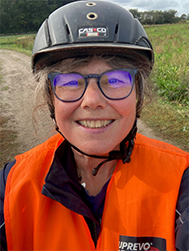 Helle Stege, Associated Professor,
Grønnegårdsvej 3, 1.
DK-1870 Frederiksberg
hst@sund.ku.dk
Phone: +45 23812514
Funded by:
 |
 |
 |
|
|
|
|
 |

External members:
| Name | Title | Phone | |
|---|---|---|---|
| Anders Ringgaard Kristensen | Professor Emeritus | ark@sund.ku.dk | |
| Vivi A. Moustsen | Affiliated Associate Professsor | vam@seges.dk | |