
Animal Health and Welfare
The goal of this section is to conduct research related to veterinary science within the fields of bioethics, animal behaviour and epidemiology. The research focuses on identifying and describing patterns, associations and relationships, and using this knowledge to improve animal welfare, sustainability and profitability within animal production.
The subjects of animal welfare, prudent use of antibiotics, sustainable production systems and profitability for farmers are the core of the research in this group. This creates value for society in general because it develops and evaluates novel ways of optimizing animal welfare and profitability at both the farm and national level, including prioritising the prudent use of antibiotics.
Studies in animal behaviour and bioethics provide a foundation of basic knowledge, to create a better understanding of the interaction between people and animals.
Studies of disease spread and the effectiveness of control measures help farmers, vets and other people in the field to reduce spread of diseases. Moreover, all of the mentioned disciplines are combined in the One Health approach, improving the sustainability of co-existence for humans and animals at the same time.
RESEARCH GROUPS:
- Animal Genetics & Breeding (Associate professor Peter Karlskov-Mortensen)
- Animal Welfare and Animal-Human Relations (Professor Björn Forkman)
- Epidemiology and Disease Control (Professor Søren Saxmose Nielsen)
- Infectious Disease Epidemiology & Animal Health Economics (Professor Beate Conrady)
- Ruminant Systems and One Health (Professor Liza Rosenbaum Nielsen)
- Monogastric Animal Nutrition and Feeding (Associate professor Anni Øyan Pedersen)
- Data & Modelling (Associate professor Helle Stege)
- Pig Health (Professor Ken Steen Pedersen)
- Book on evaluation of One Health initiatives: https://www.wageningenacademic.com/doi/book/10.3920/978-90-8686-875-9. One Health combines the disciplines of animal and human health and ecosystems. This is a handbook that provides an overview of concepts and processes as well as guidance on how to implement the One Health approach.
- Lahrmann, H. P., Hansen, C. F., D’Eath, R., Busch, M. E., & Forkman, B. (2018). Tail posture predicts tail biting outbreaks at pen level in weaner pigs. Applied Animal Behaviour Science, 200, 29–35. https://doi.org/10.1016/j.applanim.2017.12.006. This study shows that lowered tail postures in pigs can be utilized to predict tail biting outbreaks at pen level.
- Sandøe, P., Corr, S. A., Lund, T. B., & Forkman, B. (2019). Aggregating animal welfare indicators – Can it be done in a transparent and ethically robust way. Animal Welfare 28(1): 67-76. Serious challenges arise within the process of creating an index for animal welfare. In this study, we focus on the ethical aspects of this problem and discuss the different ways to proceed.
This section contributes knowledge, articles, and results within its core areas to the website Dyreetik.dk.
Dyreetik.dk is a web site run by the Faculty of Health at the University of Copenhagen. The person responsible for the site is Peter Sandøe, professor of animal ethics.
An English version of Dyreetik.dk is found at AnimalEthics.ku.dk. The aim of the site is to share insights and reflections regarding animal ethics and animal welfare. It contains academic papers and other academic publications which as far as possible are made available in an open access format. Furthermore it contains introductory texts aimed primarily at students, professionals and university teachers from veterinary and animal science and other branches of biology.
The section’s areas of expertise are
Bioethics:
- Veterinary ethics and science theory
- Science theory for students of the production animal sciences
- Responsible Conduct of Research (mandatory PhD course)
Ethology
- Ethology
- Forensic medicine and welfare evaluation
- Applied ethology
Veterinary epidemiology
We teach methods for investigating causes of the distribution of diseases, as well as methods and tools for combating diseases in populations. This includes the following courses:
- Basic statistics and epidemiology
- Epidemiology I: Planning a study
- Epidemiology II: Analyzing continuous, count and dichotomous data from observational studies
- Epidemiology III: Analysis of clustered data – with emphasis on veterinary- and animal science applications
- Diagnostic Test Evaluations
- Ad hoc courses
Interdisciplinary and applied areas
- Animals, humans and society
- Health and Welfare
- Equine nutrition and management
- Master of Veterinary Public Health: Risk Analysis of Animal Health and Food Safety
- Herd- and Societal Health
- Differentiation: Heart diseases
- Differentiation: Biomedicine
- Differentiation: Diseases in Family Animals
- Differentiation: Production animals
- Veterinary Forensic Medicine
- Master of Veterinary Public Health: Disease Outbreak Management
- Master of Veterinary Public Health: Disease Control and Dynamics - in a One Health Setting
- Master of Veterinary Public Health: Animal Health Economics

Head of Section
Professor Hans Houe
Mail: houe@sund.ku.dk
Phone: +45 353-33014
Address:
Grønnegårdsvej 8
DK-1870 Frederiksberg C
Project: Robuste kalve
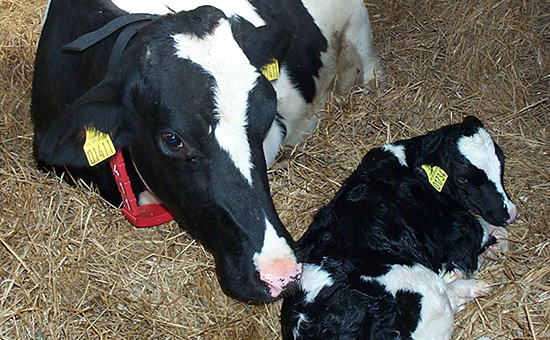
The aim is to promote the breeding of robust calves by producing knowledge and tools for optimal health management of calves, with a focus on the first months of life, so that calf mortality and antibiotics-
consumption can be lowered.
Read more about "Robuste kalve" (in Danish)
Project: ACROBAT
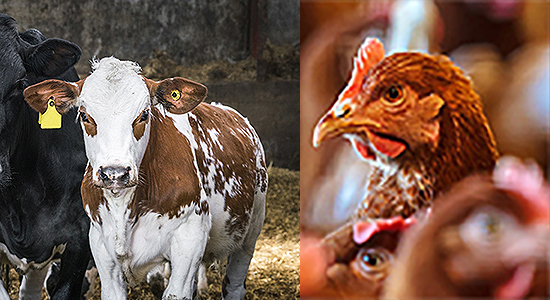
Reduced use of AntimiCROBials in cAttle and poulTry. Read more about the ACROBAT project
Epi-Flu: Preparedness tools for avian influenza in cattle
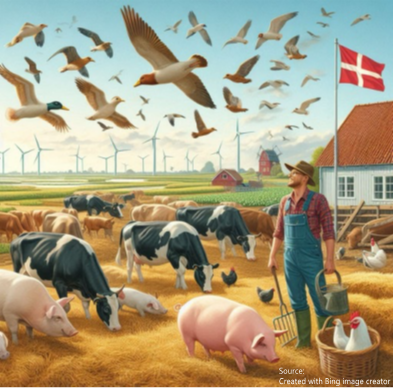
The aim is to develop an effective preparedness tool to manage Avian Influenza outbreaks in the Danish cattle population.
Read more about Epi-Flu here
Group/project members
This content is temporarily unavailable because the system it is fetched from cannot be reached. The rest of the site works as usual.
Status is available on the operating status page.